Who Can Be Responsible for an Intersection Accident in Indiana?
Liability for an intersection accident in Indiana depends on which driver failed to follow the traffic laws that apply at that location — including traffic signals, stop signs, yield signs, and right-of-way rules. The driver who violated those rules is typically responsible for the crash. However, fault is not always obvious, and insurance companies will often dispute it. Gathering strong evidence early is critical to protecting your right to compensation.
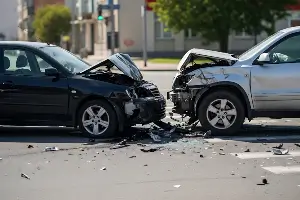 Two drivers. One intersection. Two completely different versions of what happened. That scenario plays out in insurance offices and civil claims regularly, and it is why intersection crashes produce more disputed liability claims than almost any other type of collision. Who had the right of way, which traffic law applied, and what the evidence actually shows are the questions that determine what an injured victim can recover.
The problem is that the evidence answering those questions has a short life. Traffic camera footage cycles out within days. The gouge marks and debris field that tell the physical story of the crash may be gone as soon as the road is cleared. The driver who hit you already has an insurance team working on their version of events.
The sooner you understand how fault gets established in these cases, the better positioned you are to protect your claim.
Why Are Intersection Crashes So Dangerous?
Intersections bring vehicles, pedestrians, and cyclists together from several directions. Drivers may need to respond quickly to turning vehicles, changing signals, or someone entering their path.
Several factors can increase the risk of serious harm:
- Speed of the striking vehicle: Higher approach speed means greater force and more severe injuries.
- Point of impact: Side-impact collisions offer the least structural protection for occupants.
- Vehicle size disparity: The smaller vehicle absorbs a disproportionate share of the crash force.
- Delayed or absent braking: A driver who never braked delivers full crash energy at impact.
- Secondary impacts: Being pushed into oncoming traffic, poles, or other vehicles often compounds the initial harm.
- Occupant position and restraint: Anyone seated directly at the point of impact and unrestrained faces the greatest risk.
Some injuries may not cause immediate pain or noticeable symptoms. Medical records can help document when symptoms appear and how they relate to the crash.
What Are the Most Common Causes of Intersection Accidents in Indiana?
Intersection crashes are typically caused by various types of driver negligence and driving errors. Traffic controls and right-of-way rules help determine whether a driver failed to use reasonable care.
- Running red lights: A driver entering against a red signal may cross the path of vehicles, cyclists, or pedestrians moving through the intersection.
- Failure to stop at stop signs: A rolling stop or complete failure to stop may place a vehicle directly in the path of cross traffic.
- Negligent left turns: A driver may cause a collision by turning across oncoming traffic without yielding or by misjudging an approaching vehicle’s speed.
- Failure to yield on right turns: A driver making a right turn must yield to traffic or pedestrians who hold the right-of-way.
- Roundabout errors: Crashes may occur when drivers enter without yielding, choose the wrong lane, or change lanes unsafely.
- Improper turn signal use: Failing to signal, signaling too late, or leaving a signal can mislead others about a driver’s intended movement.
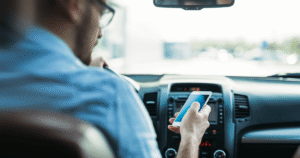
- Distracted driving: A distracted driver may miss a signal, stop sign, turning vehicle, cyclist, or pedestrian until avoiding a collision becomes difficult.
- Impaired driving: Drivers impaired by drugs or alcohol may try to beat a yellow light, or blow through an intersection with no regard for who had the right of way.
- Speeding through intersections: A speeding vehicle needs a longer stopping distance and leaves drivers less time to respond when signals change or another road user enters the intersection.
How Is Fault Determined After an Intersection Accident in Indiana?
An insurer may assign fault during a claim, but that decision does not establish civil liability. A court or jury may reach a different conclusion after reviewing the evidence.
- Traffic laws: Indiana’s signal, right-of-way, turning, and speed laws provide the starting point. A violation may support fault, but a citation or police finding does not decide civil liability.
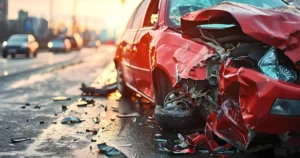
- Physical evidence: Vehicle damage, impact points, debris, tire marks, and road conditions may help establish how the vehicles moved before impact.
- Camera footage: Dashcam and surveillance footage may show signal changes, vehicle positions, or whether a driver failed to yield.
- Witness accounts: Independent witnesses may clarify which driver had the right-of-way, entered first, or violated a traffic signal.
How Indiana’s Modified Comparative Fault Rule Applies
For most claims against private parties, Indiana permits recovery when the injured person is 50 percent or less at fault. Any compensation is reduced by that person’s percentage of fault.
An insurer may dispute the injured person’s share of fault because that percentage can affect the payment. Claims against government entities follow different rules. Even a small share of fault may bar recovery against a government entity.
What Evidence Can Help to Support an Intersection Crash Claim?
Proving what happened at an intersection is harder than it sounds. Critical crash debris and other evidence will get cleared away within hours. Evidence, like the police report documented at the scene is helpful, but intersection crashes are often disputed. These cases can often become a “he said; she said” situation.
Key evidence that is valuable in proving an intersection crash claim and who had the right of way includes:
- Traffic signal data: Signal timing records show what color each light displayed at the moment of impact. Many municipalities retain this data, but it requires a prompt request before it is purged or overwritten.
- Dashcam and surveillance footage: Intersection cameras may capture approach speeds, signal changes, and right-of-way in real time. Dashcam footage from other vehicles at the intersection may provide another angle of the crash. But these videos may get overwritten in as little as 24 to 72 hours.
- Skid mark and debris patterns: The length and direction of skid marks, final vehicle positions, and debris scatter tell a physical story about speed, braking, and point of impact that driver accounts cannot override.
- Signal malfunction records: If a light was malfunctioning or had known timing issues, maintenance records from the Indiana
- Vehicle black box data: Speed, braking, and steering input in the seconds before impact can confirm or contradict each driver’s account of what they were doing when they entered the intersection.
What Types of Injuries Are Common in Intersection Accidents?
Intersection crashes can cause several forms of physical harm. The severity of the injuries often depend on the direction, location, and force of the impact.
These are some of the most common injuries from intersection crashes:
- Traumatic brain injuries: A sudden blow or violent head movement can disrupt brain function in ways that aren’t always immediately visible.
- Spinal cord injuries: Depending on location and severity, spinal damage can affect movement, sensation, or both.
- Broken bones: Ribs, arms, legs, and pelvis fractures are common. Many require surgery and months of recovery.
- Soft tissue injuries: Whiplash and ligament damage often surface after the initial shock fades, sometimes days later.
- Internal injuries: Organ damage and internal bleeding may not be visible but can be life-threatening without prompt care.
- Wrongful death: T-bone crashes are among the deadliest collision types. Indiana law gives surviving families the right to pursue a wrongful death claim.
How Much Could an Intersection Car Crash Claim Be Worth?
That question is almost impossible to answer without knowing the full picture, and anyone who gives you a number before understanding your injuries, your losses, and what happened at that intersection is guessing.
What we can tell you is what actually moves the value of a claim. The nature and permanence of the injuries matter most. A soft tissue strain that resolves in a few weeks is a different claim than a spinal injury that permanently changes how someone works, moves, and lives. Medical costs, lost income, and reduced future earning ability can all be calculated with the right documentation. Pain, permanent limitation, and the toll on someone’s daily life are all real losses too, and Indiana law recognizes them.
When a crash at an intersection takes a life, the family’s loss does not end with funeral costs. A wrongful death claim can address the financial support, companionship, and future that was taken from them.
Why Fault in Intersection Crashes Is Frequently Disputed
Most people who cause an intersection crash don’t believe they are responsible. Both drivers may often claim they had the green light or the right of way. When there are two completely different accounts of the same crash, the insurance adjuster has to decide which one to believe. This is why critical evidence from the crash scene is so important to you claim.
South Bend Intersections and the Local Roads Where Crashes Happen
Intersection crashes can occur throughout South Bend, including Ironwood Drive, Mishawaka Avenue, and Lincoln Way. These roads contain intersections serving local traffic, businesses, and nearby neighborhoods.
The U.S. 31 corridor and U.S. 20 Bypass include interchanges and connections where local and through traffic meet. Michigan Street also carries vehicles, buses, cyclists, and pedestrians through downtown South Bend.
The responding agency depends on the crash’s location and circumstances. South Bend Police, St. Joseph County Police, or Indiana State Police may prepare the report. The report number and responding officer’s information can help identify where to request the record.
Frequently Asked Questions About Intersection Accidents in Indiana
Who is at fault in an intersection accident in Indiana?
Fault usually falls on the driver who failed to follow right-of-way rules, such as running a red light or turning without yielding. Evidence like camera footage, witness accounts, and physical damage helps establish what happened. A police report is a starting point, not the final word on legal fault.
What if there were no witnesses to my intersection crash?
A claim can still move forward without witnesses. Physical evidence, vehicle damage, camera footage, and data from a vehicle’s black box can all help reconstruct the crash. An attorney can gather these sources before they disappear.
What if both drivers claim they had the green light?
This is one of the most common intersection disputes. When accounts conflict, evidence decides the outcome, including traffic camera footage, nearby business cameras, and the timing of the signals. This is why preserving evidence early matters so much.
Can I still recover compensation if I was partially at fault?
Yes, as long as your share of fault is less than 51 percent. Indiana follows a modified comparative fault rule, which reduces your compensation by your percentage of fault. If you are found 51 percent or more at fault, you cannot recover.
What should I do immediately after an intersection accident in Indiana?
Call the police and seek medical care, even if you feel fine, because some injuries appear later. If it is safe, take photos of the scene, the vehicles, and the signals, and collect contact information from any witnesses. Avoid admitting fault or giving a recorded statement before speaking with a lawyer.
Can a malfunctioning traffic signal affect who is liable for my crash?
Yes. When a broken or mistimed signal contributes to a crash, the government entity responsible for maintaining it may share liability. These claims follow stricter rules and shorter deadlines, so acting quickly is important.
What if the at-fault driver ran a stop sign but there were no cameras?
A lack of camera footage does not end your claim. Skid marks, vehicle damage, the final resting positions of the cars, and witness accounts can all help show that the other driver failed to stop. An accident reconstruction expert can also help establish what happened.
How long do I have to file an intersection accident claim in Indiana?
In most cases, you have two years from the date of the crash to file a personal injury claim. That deadline changes when a government entity is involved. If a city or county may share liability, you generally have only 180 days to file a notice, and if the State of Indiana is involved, you have 270 days. These shorter deadlines can pass long before the standard two-year window, so it is worth confirming which applies to your situation early.
Hurt in an Intersection Crash in South Bend? Pfeifer, Morgan & Stesiak Is Here to Help.
A crash at an intersection can leave you hurting, uncertain, and facing questions you never expected to ask. Whether you were injured or lost someone you love, you do not have to sort through it alone, and you have the right to hold a negligent driver accountable for the harm they caused.
Our South Bend car accident lawyers knows the roads you drive, the agencies that handle these crashes, and the tactics insurance companies use to pay you less. From serious injury claims to working with families as their wrongful death lawyer, we are ready to review your situation, protect your claim, and pursue the full compensation you deserve.
Call Pfeifer, Morgan & Stesiak today at (574) 444-0741.